IT Help Desk AI Agent Services
Most help desk tools give your employees a chatbot to argue with. We build AI agents that log into your systems, verify user identity, execute the fix, and close the ticket, without a human in the loop.
Pre-built bots handle the conversation. They rarely handle the problem. Here is what that costs enterprise IT teams every quarter.

A chatbot routes the ticket to a human. An AI agent logs in, runs the fix, and closes it. Deflection is not resolution, and your Tier-1 backlog proves it.

Pre-built tools read ticket data but never write back. The agent resolves the issue verbally while your ServiceNow record sits untouched, untracked, and out of compliance.

Off-the-shelf bots have no knowledge of your org structure, runbooks, or escalation paths. Every enterprise IT environment has edge cases that generic flows cannot handle.
-2c617ea2-65d4-46ec-9385-d408ed94933e.png&w=1920&q=65)
Security and compliance added after deployment is security theater. SOC 2, ISO 27001, and HIPAA controls need to be in the architecture from day one, not retrofitted under audit pressure.

Agents that verify user identity, enforce MFA policy, and complete resets in Active Directory or Okta without any human intervention. Average handle time: under 90 seconds.

Classifies incoming incidents by priority, affected system, and business impact. Assigns to the right team and populates ticket fields before a human ever sees it.

Handles 40-60% of help desk volume that follows repeatable runbooks, like software access, printer errors, and VPN failures, and closes the ticket without escalation.

Grants or revokes access across AD, Okta, Azure AD, and SaaS applications based on role, approval chain, and policy. Every action is logged and auditable.
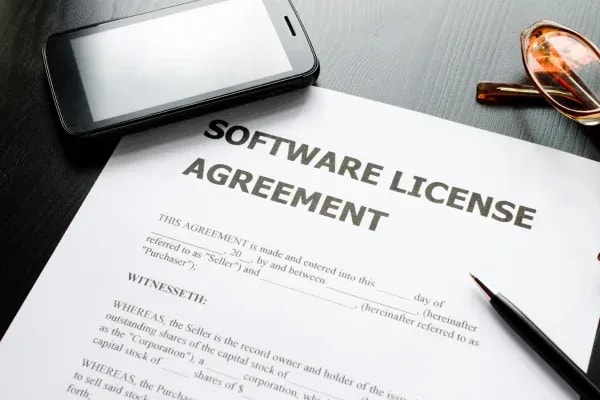
Checks license availability, pushes software via SCCM or Intune, confirms installation, and updates the asset register, end-to-end without queue wait time.
-81d849c2-1b66-4789-a856-20816d462e01.webp&w=1920&q=90)
Processes hardware requests, checks inventory, creates purchase orders where needed, and updates CMDB records. Warehouse staff get a work order. The employee gets an ETA.
-829e5d39-8f3f-4307-b6a4-2f02c7d72df9.webp&w=1920&q=90)
Connects your Confluence, SharePoint, or Notion knowledge base to a retrieval-augmented agent. Employees get accurate, source-cited answers, not hallucinated guesses.
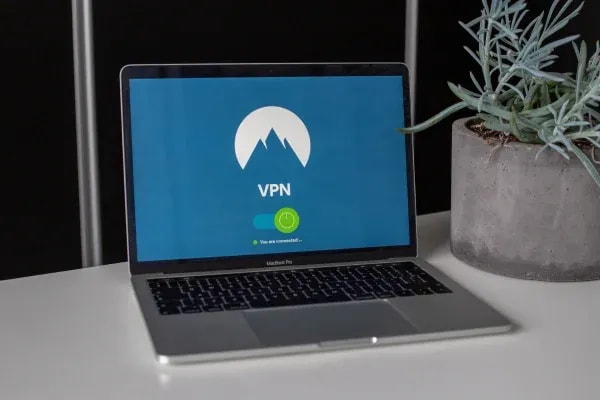
Walks through diagnostic steps, checks endpoint policy compliance, and resets VPN credentials or certificates when the root cause is identified. No L1 analyst required.
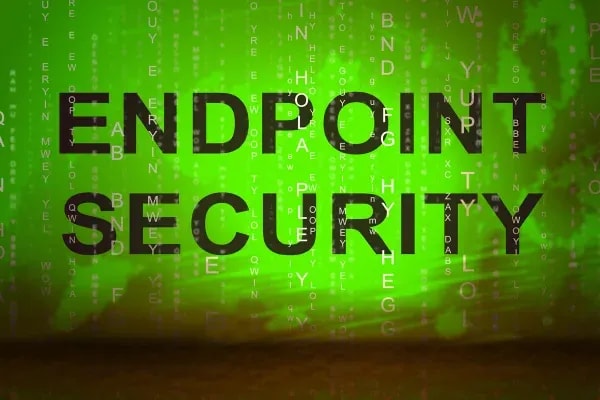
Pulls device health data from Intune or Jamf, runs diagnostics remotely, and pushes remediations, including patch application, policy enforcement, and software repair, before escalating.
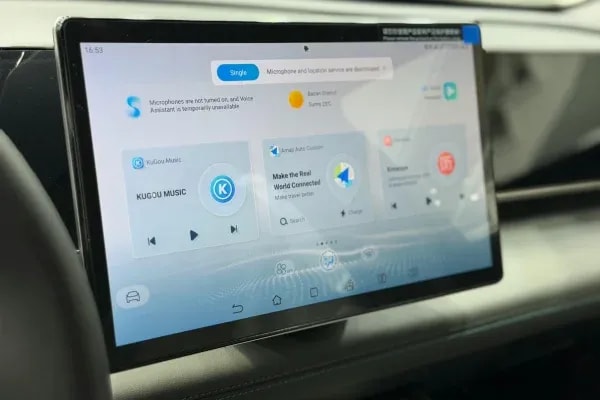
Coordinates account creation, device assignment, application provisioning, and access revocation across HR, IT, and security systems. Day-one access, without the three-day delay.

Monitors ticket age against SLA thresholds in real time. Flags at-risk tickets, auto-escalates to the right tier, and sends owner notifications before the breach clock expires.

Aggregates signals from monitoring tools, drafts the incident record, sends stakeholder notifications, and tracks action items, so your incident commanders focus on resolution, not administration.

Multi-region, multi-language IT operations with complex Active Directory structures, tiered support models, and 24/7 SLA commitments. We build for scale from day one.
MSPs running multi-tenant environments need agents that respect client boundaries, enforce per-client policy, and produce billable-hour-quality audit trails automatically.
Large internal help desks are processing thousands of tickets daily, where even a 10% improvement in auto-resolution rate saves millions in annual support costs.
Engineering-driven organizations where IT teams are small, ticket volume is high, and the employee experience bar is set by the product team. Speed and accuracy matter equally.
Regulated environments where every privileged action requires an audit trail, change windows are narrow, and a poorly handled access request can become a compliance incident.
Hospitals and health systems where clinical staff cannot wait in a ticket queue, PII must never reach an uncontrolled LLM, and HIPAA is non-negotiable in every workflow.
We design orchestrated multi-agent architectures where each agent does one thing precisely and hands off correctly.
Get a QuoteA central orchestrator interprets intent, routes tasks to specialist agents for triage, identity verification, and action execution, and assembles the final response. It is not a single monolithic prompt chain.
Agents retain context from prior interactions: previous tickets, known device issues, and employee preferences. Employees do not re-explain the same problem twice.
Agents call real APIs, like ServiceNow, Okta, Microsoft Graph, and take real actions. Not suggested actions. Not draft tickets. Actual system changes with documented results.
Access provisioning for privileged roles, bulk changes, and financial system integrations routes to a human approver before execution. The agent prepares the full context so approval takes seconds, not minutes.
Every action an agent takes, as the API call is made, the data retrieved, and the decision logic applied, is written to an immutable audit log. Regulators and security teams can inspect any resolution end-to-end.


Full bidirectional integration: ticket creation, status updates, CMDB writes, approval workflows, and SLA field population, all from within the agent's action layer.
Agents create, transition, comment on, and close Jira and Freshservice tickets. Custom workflows and issue types are mapped during implementation, not assumed.
For organizations running mid-market ITSM platforms, we build the same action-capable integrations, not read-only queries that still require a human to do the work.
Password resets, group membership changes, account enable/disable, MFA enrollment, and conditional access policy enforcement, all executed by the agent with full logging.
Agents check device compliance status, push configurations, trigger remote wipe, and enroll devices. Both Windows and macOS device management in the same orchestration layer.
Agents meet employees where they already work. Ticket creation, status updates, and approvals happen inside the tools your employees have open all day.
Every build follows the same structured process. No shortcuts on compliance scoping, no skipped validation steps.

The agent reads the request, like a free-text message, a structured ticket, or voice-to-text, and classifies the intent against your catalog of supported workflows before taking any action.

Before executing anything, the agent confirms who is asking and what they are authorized to request. Identity verification uses your existing IdP; the agent does not manage credentials itself.

The agent checks your RAG-indexed knowledge base and runbook library before formulating a response or action plan. Answers are grounded in your documentation, not the model's training data.

The agent calls the relevant APIs, resetting the password in AD, updating the ticket in ServiceNow, pushing the software via Intune, and waits for confirmation before closing.

Outcomes:
We follow a structured eight-phase methodology to ensure AI agents operate securely, accurately, and reliably within production ITSM environments.

We pull 90 days of ticket data and analyze it by type, volume, resolution time, and escalation rate. The goal: identify which workflows have the highest ROI for automation before writing a line of code.
-9a484f9b-ebc0-4977-bcab-d6a54228488e.png&w=1920&q=65)
Each candidate workflow is mapped end-to-end; every system touched, every decision point, every exception. Scope is locked before architecture begins. Scope creep kills agent deployments.
-2c617ea2-65d4-46ec-9385-d408ed94933e.png&w=1920&q=65)

We audit what data the agent will access, how it flows, and where it is stored. Compliance requirements, SOC 2, HIPAA, GDPR, and ISO 27001, are mapped to architecture decisions at this stage.
-0934cb99-a9bc-45b8-860e-50c9ef38eba2.png&w=1920&q=65)
We select the orchestration pattern, LLM, memory design, and tool-use layer based on your workflows and security posture. We do not default to GPT-4 for everything. We select what fits.

We build and test the API connectors to your ITSM, IAM, and endpoint management platforms. Simultaneously, your knowledge base and runbooks are cleaned, chunked, and indexed into the vector store.
Before the pilot, every agent is tested against real ticket samples. We run adversarial prompts designed to trigger hallucination, privilege escalation, and policy bypass. Agents that fail do not go to pilot.
-bce0b011-abd2-4c80-8e8c-9342eef314f6.png&w=1920&q=65)

Pilot runs with every agent action reviewed by a human approver. This is not a soft launch; it is the calibration phase where edge cases are surfaced, and runbook gaps are closed before full deployment.

Full deployment with LangSmith monitoring, tracking resolution accuracy, escalation rate, and response latency. Retraining cycles run quarterly or when drift metrics cross defined thresholds.
We do not resell a platform with your logo on it. Every agent is built for your ticket taxonomy, your ITSM schema, and your compliance posture. No two deployments are the same.
Our engineers have shipped production integrations with ServiceNow, Jira, BMC Helix, and Freshservice, not sandbox demos. We know where the undocumented API edge cases live.
We have built bidirectional ServiceNow and Jira integrations complex enough that our middleware handles schema differences across client versions.
We measure success by production performance, like resolution rate, MTTR, SLA compliance, not pilot metrics. Pilots are designed to expose failure modes, not to confirm the demo.
You own the agent code, the prompt architecture, the integration layer, and the documentation. There is no per-resolution fee. There is no platform dependency that holds your automation hostage.
Discovery through deployment through retraining; we run the full engagement. You do not manage three separate vendors for architecture, integration, and operations.
Reduce Tier-1 backlog with AI agents that reset passwords, provision access, update ITSM records, and resolve repeat requests inside your systems.

Fill the form below or Contact us at +1 408 365-4638 / email us via contact@folio3.ai
Years of Engineering Excellence
Delivered Worldwide
Client Satisfaction
Years of Advanced AI Expertise
Response Guaranteed
+1 408 365-4638
contact@folio3.ai
6701 Koll Center Parkway, #250 Pleasanton, CA 94566