
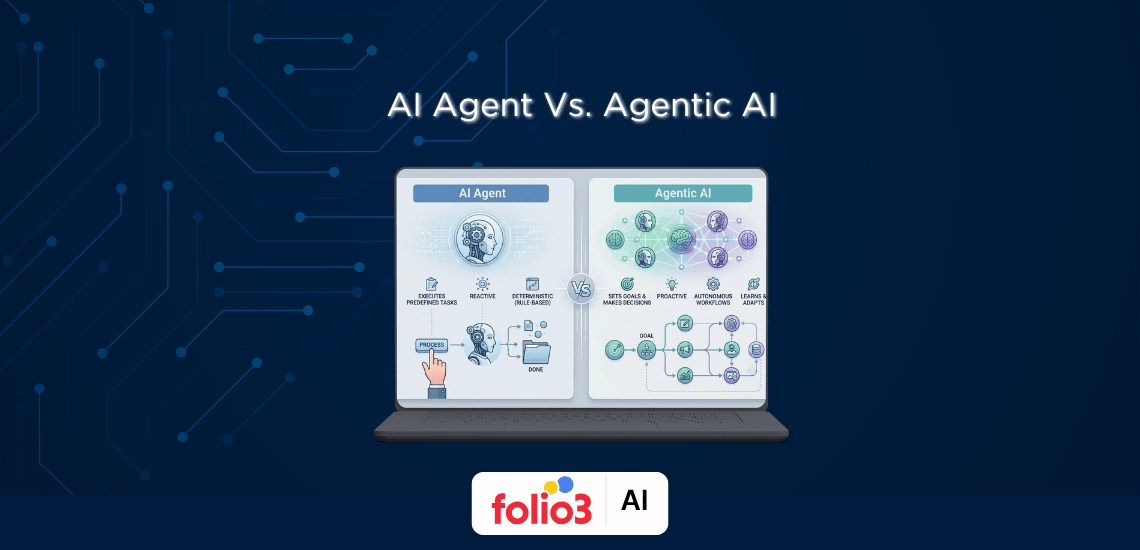
AI Agent vs Agentic AI: What's the Difference?
This guide breaks down the real difference, how each one works, when to use them, and what business owners should pick for their next automation project.
Explore 75 real-world AI agent use cases across healthcare, finance, insurance, retail, logistics, HR, cybersecurity, and more. Learn how AI agents move beyond chatbots to automate tasks, make decisions, and complete workflows across industries.
-c7a98ba5-1130-4ec6-9ead-2f817af21bd7.png&w=1920&q=90)
Most people are still confused about what an AI agent does that a chatbot doesn't. Fair question. A chatbot answers. An agent decides, calls tools, and finishes a task. That difference is why Gartner predicts that by 2028, 33% of enterprise software applications will include agentic AI, up from less than 1% in 2024. For business owners, that shift is not theoretical. It is already changing how claims get paid, how tickets get closed, and how warehouses move stock.
This guide covers 75 real AI agent use cases, organized by industry, with examples of agentic AI that companies are running in production right now. If you want to skip to working deployments, Folio3's agentic AI platform has a marketplace of pre-built agents you can review.
An AI agent is software that uses a language model to plan, decide, and act on its own. It can read data, call APIs, query a database, or trigger another system, and then check whether the task is done. If the first attempt fails, it tries something else.
The simple way to think about it: a chatbot writes a reply. An agent writes a reply, files the ticket, updates the CRM, and sends a follow-up email three days later if nothing has happened.
That's the practical line between traditional automation and agentic AI. Rule-based bots break the moment the input changes. Agents adapt because they reason about the goal, not just the script.
Healthcare is where agents have moved fastest, partly because the paperwork burden is so heavy that any automation pays for itself in weeks. Below are five real-life applications of healthcare AI agents that hospitals and payers are running now.
Prior authorization is one of the most hated tasks in American healthcare. Agents now read the clinical note, pull the relevant policy, and submit the auth request, escalating only the edge cases. The American Medical Association reports that physicians spend an average of 12 hours per week on prior authorization, so the time savings are real.
Ambient AI agents listen during the visit, draft the note, and post it to the EHR for the clinician to approve. Abridge and Nuance DAX are the names you hear most often in hospital pilots.
Triage agents handle the first conversation when a patient calls or messages, ask follow-up questions, and route to urgent care, telehealth, or a nurse line based on severity.
Agents watch the stream from wearables and home devices, ignore noise, and alert the care team only when a pattern looks clinically meaningful. Cuts a lot of false alarms.
Coding agents read the chart, assign ICD-10 and CPT codes, and flag anything the chart doesn't support before the claim goes out: fewer denials, faster payment.
Banks have run machine learning models for fraud for years. What's new is ai agents for banking that can investigate, freeze, and notify on their own, instead of just scoring a transaction.
Agents look at the transaction in context, recent activity, device, location, and decide in milliseconds whether to allow, challenge, or block. Visa reported blocking $40 billion in fraudulent transactions in 2023 using AI systems.
Trading agents handle order routing, slicing, and timing across venues. Humans set the strategy. The execution is not.
AML agents trace money across accounts and jurisdictions, looking for layering and structuring. They build the case file and hand it to the analyst with the suspicious nodes already mapped.
Underwriting agents pull bank statements, parse cash flow, check fraud signals, and produce a decision packet. The lender still approves, but the prep work is gone.
Robo-advisor agents adjust portfolios based on life events the user reports, like a new job or a baby, and rebalance without anyone logging in.
Build with Folio3 AI: autonomous agents that reason, act, and complete multi-step work across your systems.
See Agentic AI in ActionInsurance is paperwork shaped like a business. Agents fit naturally.
A customer uploads a photo of the dented bumper. The agent estimates the damage, checks the policy, and either approves the payout or routes to an adjuster. Lemonade has been doing a version of this since before the LLM era and has since upgraded it.
Underwriting agents pull data from third-party sources, score the risk, and price the policy. Faster turnaround for the customer, less manual work for the carrier.
Renewal agents flag policies that need re-rating, send the customer a personalized renewal offer, and handle the back-and-forth on coverage changes.
Agents review claims flagged by fraud models, pull supporting evidence from social media and public records, and rank cases for SIU review. These insurance AI agents help SIU teams focus on the cases most likely to be genuine fraud.
Policyholders can ask, "Is this covered?" and get an answer grounded in their actual policy document, not a generic FAQ.
"Fraud triage is a good example of where agents earn trust slowly and correctly. The agent's job is not to decide guilt. It is to do the evidence gathering that a human investigator would spend half a day on, so the investigator spends their time on judgment instead of searching." — Abdul Sami, Head of AI Development, Folio3 AI
Retail is where personalization has been promised forever and underdelivered. Agents are closer to the promise because they can act, not just recommend.
Agents adjust recommendations in real time as the customer browses, factoring in inventory and margin, not just affinity.
Pricing agents watch competitor moves and demand signals and reprice continuously. Amazon does this on millions of SKUs. Mid-market retailers are now using off-the-shelf agents to do the same.
Agents forecast at the SKU level, place purchase orders, and shift stock between locations when one store sells out and another is sitting on it. This often runs as a multi-agent AI system, with separate agents handling forecasting, procurement, and logistics working in coordination rather than a single agent trying to do it all.
When a cart is abandoned, the agent decides whether to send an email, a discount, or nothing based on the customer's history. Blanket "10% off" blasts are going away.
Agents handle returns, refunds, and shipping questions end to end, updating inventory and finance systems as they go.
Logistics is the area where the ROI math is easiest to defend. Every minute saved on a route or a customs form is money for an ai agent for logistics deployment.
Routing agents replan in real time as traffic, weather, and new orders come in. UPS has been doing this with ORION; the newer agents push the same logic to smaller fleets.
Agents coordinate human pickers and robots, balancing workloads and reorganizing pick paths as orders shift.
When a port closes or a flight cancels, the agent finds an alternate route, notifies the customer, and updates the ERP without anyone touching it.
Customs agents read commercial invoices, classify goods, and generate the filings. Cuts hours off cross-border shipments.
Agents chase ETAs, confirm POs, and follow up on missed deliveries through email and EDI, freeing buyers from inbox work.
Factories were early adopters of analytics. The agent layer is what makes the analytics actionable without a human in the loop.
Agents watch vibration, temperature, and acoustic sensors, predict failures, and schedule maintenance during planned downtime. Deloitte's research on predictive maintenance shows it can reduce maintenance costs by 25%.
Vision agents on the line catch defects faster and more consistently than human inspectors, and they explain what they saw so engineers can fix the root cause.
Scheduling agents balance machine availability, materials, labor, and orders, and reschedule when something breaks.
Agents reconcile what the ERP says is happening with what the sensors say is actually happening, and flag the gap.
When a worker has an incident, the agent helps file the report, pulls the relevant video and sensor data, and routes it to EHS.
This is where I see the most aggressive deployment right now, and the most disappointment when it's done wrong. The agents who work are the ones with access to real systems, not just a knowledge base.
Agents close password resets, order status questions, and subscription changes without a human. Klarna reported its AI assistant handled two-thirds of customer service chats in its first month, doing the work of 700 agents.
Routing agents classify by topic, urgency, and customer value, and put the right ticket in front of the right person.
After the ticket closes, the agent checks back a few days later to confirm the fix was held. Catches reopen before they become escalations.
When agents see the same question three times, and there's no article, they draft one and send it to a human to approve.
Agents watch support tickets, usage data, and NPS responses for early churn signals and trigger retention plays.
Agentic ai solutions for hr are a clear fit here because so much of the work is process-heavy, and the same questions get asked a thousand times.
Screening agents rank candidates against the job description, surface the strong matches, and flag the borderline ones with a reason.
Scheduling agents handle the back-and-forth across multiple interviewers and time zones without anyone touching a calendar.
New-hire agents walk people through paperwork, IT setup, and benefits enrollment, answering questions along the way.
Employees ask "how many vacation days do I have left?" and get an answer from the actual HRIS, not a generic policy page.
Agents validate timecards, flag anomalies, and answer payroll questions, which reduces the volume hitting the HR inbox at the end of the month.
Build with Folio3 : deployable AI agents for sales, support, operations, finance, and HR workflows.
Shop the Agent MarketplaceSales teams are mixed on agents. The ones that work treat the agent as the SDR layer, not the closer.
Outreach agents send personalized messages, handle objections, and book meetings for human AEs. 11x and AiSDR are the names in this space.
Pipeline agents flag deals that have gone quiet, identify the missing stakeholder, and prompt the rep to act.
When an SDR books a meeting, the agent writes a briefing for the AE with company news, past interactions, and likely objections.
Marketing ops agents pull data from ad platforms, attribution tools, and CRM, and produce the weekly report without anyone manually exporting CSVs.
Agents watch competitor websites, press releases, and review sites, and surface changes that matter to product and sales.
Legal was cautious for a while because the risk is high. The newer agents ground every claim in source documents, which has changed the calculus.
Agents review contracts against the playbook, propose redlines, and flag anything outside policy. Harvey and Ironclad are doing real work here.
A legal ai agent pulls relevant cases, summarizes holdings, and cites sources. Attorneys still verify, but the first pass is automated.
Agents draft privacy policies and terms of service tailored to the jurisdiction, and update them as regulations change.
Litigation agents track deadlines, deliverables, and dependencies across cases.
Agents watch regulatory feeds, flag changes that affect the client, and draft an impact summary.
Education is interesting because the agent's job is often to slow down, not speed up. The goal is learning, not throughput.
Tutoring agents work with students one-on-one, adjusting difficulty and explaining concepts in different ways until the student gets it.
Grading agents read essays, score against rubrics, and write feedback. Teachers spot-check.
Education ai agents adjust the curriculum based on what the student is struggling with, instead of marching everyone through the same sequence.
Agents look at student performance across topics and tell teachers where the curriculum is weak.
Reports for parents go from generic to specific, with examples of what the student has done and what to work on.
"Incident response is one of the few places where agent latency actually matters in a measurable way. The value isn't that the agent is smarter than your SOC analyst. It's that it starts containment in the seconds before a human even finishes reading the alert, and that gap is where damage either gets contained or doesn't." — Aneeq Hashmi, Director of Engineering, AI and Machine Learning
Security teams are drowning in alerts. Agents help them swim.
Agents correlate alerts across tools, dismiss the noise, and escalate the real threats with context. CrowdStrike's Charlotte AI and Microsoft Security Copilot are operating in this space.
When an incident hits, agents isolate the host, pull logs, and start the playbook while a human is still reading the alert.
Agents rank vulnerabilities by exploitability and exposure, not just CVSS score, so patching effort goes where it matters.
Reported phishing emails get analyzed and disposed of by an agent, instead of sitting in a SOC queue for hours.
Agents watch identity behavior and flag the logins that look wrong, even when they pass MFA.
A practical fit, since real estate runs on documents and lead nurturing.
Agents write the listing copy from the property data, photos, and neighborhood info.
When a lead comes in at 11 pm, the agent responds, qualifies, and books a showing, instead of letting the lead go cold by morning.
Lease agents extract terms, flag non-standard clauses, and populate the property management system.
Agents track listings, sales, and rents in a market and produce a weekly intel brief for investors.
Tenants report maintenance issues to an agent, who triages, dispatches, and follows up.
Telecom has the volume to make agents pay back fast.
Agents correlate signals across the network and identify the root cause of an outage before customers start calling.
Agents handle the long tail of complaints, billing questions, plan changes, signal issues, end-to-end.
Disputes get reviewed, refunds get processed, and the customer hears back the same day.
Agents identify customers about to leave and trigger a retention offer that matches their actual usage.
When an SLA is about to slip, the agent alerts the account team with the context they need to save the relationship.
This sector moves more slowly, but the use cases are clear.
Permit agents check the application, request missing info, and approve straightforward cases.
Eligibility agents help citizens figure out what they qualify for without making them read 80 pages of policy.
311-style inquiries get handled by an agent who knows the city's data, not a generic FAQ.
Agents catch fraud in unemployment, disability, and benefits claims earlier.
Long policy documents get summarized for staff and the public, with citations back to the source.
"The companies winning with agents right now are not the ones with the fanciest models. They're the ones who gave the agent real access to real systems. An agent with read-only access to a knowledge base is a chatbot. An agent that can update the CRM, refund the customer, and reschedule the delivery is doing the job."
Andrew Ng, founder of DeepLearning.AI, has made a similar argument in his recent talks, noting that agentic workflows often outperform larger non-agentic models on real tasks. His Sequoia AI Ascent 2024 talk is the clearest version of the case.
I have seen plenty of agent pilots that never made it to production. The ones that survived had a few things in common.
The task has clear inputs and outputs. If a human can't write down what "done" looks like, an agent can't either.
The data is accessible. Most failed pilots failed because the agent couldn't reach the systems it needed. The model was not the problem.
There's a human escape hatch. The agent handles the easy 70%, a person handles the hard 30%, and nobody pretends otherwise.
The volume justifies the build. Automating a task that happens 12 times a year is rarely worth it. Automating one that happens 12 times an hour usually is.
If you want a faster path than building from zero, Folio3's AI agent marketplace has pre-built agents for many of the use cases above.
The list above is 75 deployments, but the pattern underneath is small. Agents are working where the task is repetitive, the data is reachable, and someone is willing to measure whether the agent actually closed the loop. Where one of those three is missing, the pilot stalls. Where all three are present, the agent is usually living within a quarter. If you're trying to figure out where to start, the answer is almost always the workflow your team complains about on Monday mornings.
Build with Folio3 AI: connect with our agentic AI specialists to scope, design, and ship your use case.
Get in TouchHealthcare, financial services, insurance, and customer service have shown the fastest payback because they have high transaction volume and heavy documentation work. Retail and logistics are close behind.
A chatbot generates a reply. An agent generates a reply and then takes action: updating a record, calling an API, or triggering a workflow. Agents can also chain steps together and recover when one step fails.
Klarna's customer service agent handles two-thirds of chats, Harvey does legal research at major law firms, Cursor and GitHub Copilot write and review code, and Lemonade processes insurance claims end-to-end.
The companies I've watched succeed start with a workflow that is repetitive, has clear success criteria, and where the data is already accessible. They avoid starting with the highest-stakes use case.
Yes, and more easily than they could two years ago. Pre-built agents and marketplaces have lowered the technical bar. The constraint is usually whether the business has the data and the process documented.
They can be, with the right guardrails. That means human review on high-stakes decisions, audit logs, grounding in approved sources, and limits on what systems the agent can write to.
A claims agent at an insurer that reads the FNOL, pulls the policy, estimates damage from photos, runs a fraud check, and either approves payment or routes to an adjuster, all in under five minutes, with a full audit trail for compliance.
This guide breaks down the real difference, how each one works, when to use them, and what business owners should pick for their next automation project.
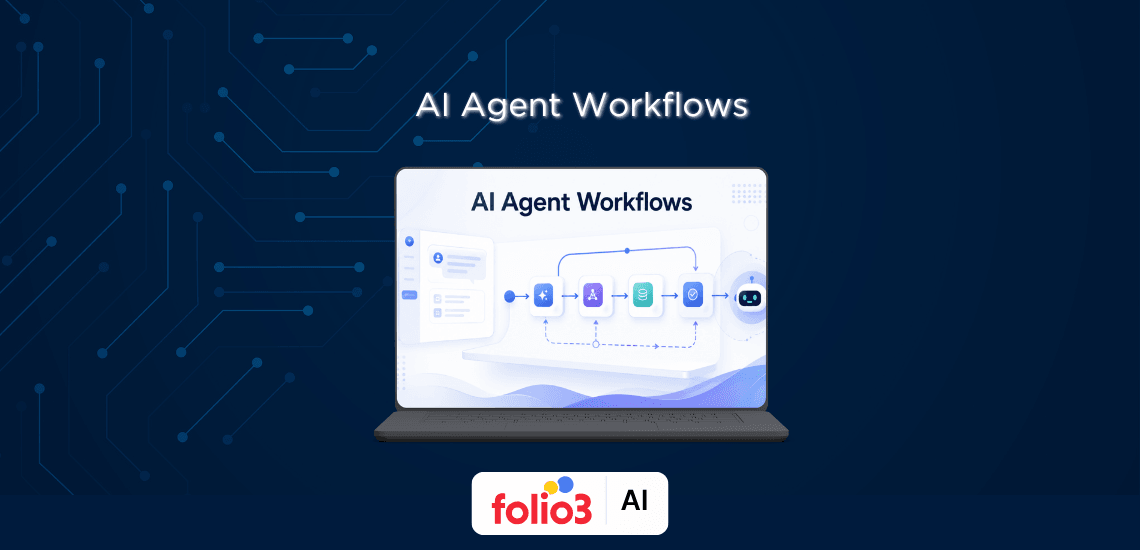
AI agent workflows turn raw LLM capability into reliable systems that reason, plan, and act. This guide breaks down workflow types, tools, design steps, and best practices business owners need to build agentic AI workflows that actually ship.
Agentic AI is transforming enterprise operations in 2026, with rapid market growth, rising adoption, strong ROI, expanding use cases, and increasing focus on governance, security, and workforce impact.